
Finding the Right Apartment Is Only Half the Battle
Updated November 2026
Most first-time buyers assume the hard part of buying in Brooklyn is finding the right apartment. It is not. The right apartment will show up, sometimes in the first week of looking and sometimes in the sixth month. The hard part is what you do in the day after you see it.
I have been helping people buy in Brooklyn for more than fifteen years, and the pattern rarely changes. I walk a first-time buyer through a typical timeline, including how fast good properties move here. They nod, they understand, and they mean it. Then the right place comes on the market, and instead of acting, they hesitate. Or they decide to open low and negotiate up. Meanwhile, someone else signs the contract. It usually takes losing one or two places before the lesson sticks.
The Apartment Will Not Wait
In Brownstone Brooklyn, a well-priced property in good condition, or any condition, draws a crowd at the first open house, and the listing agent is often asking for best and final offers by the middle of the next week. A lowball opening offer is not a negotiating tactic in that setting. It takes you out of the running while the buyers who came in serious compete with each other.
The buyers I see win are not always the ones with the most money. They are the ones who understand the market, know their limits, and are prepared to submit a strong offer the same day instead of taking a week to talk themselves into it. I have had many clients see the right place, make an offer within 24 hours, and get it. That takes no special talent. It takes preparation, a realistic view of the market, and the willingness to go after it.
Ready Means Pre-Approved
Before you look at anything seriously, you should know four numbers: what you can afford in total, how much of that you will pay in cash, how much you will finance, and what you can comfortably pay each month.
Your cash number has to cover more than the down payment. On a condo, buyer closing costs typically run 3% to 4% of the purchase price, and a purchase at $1 million or more adds the mansion tax, starting at 1%. First-time buyers who budget only for the down payment find this out at the worst possible moment.
If you are financing, get a pre-approval based on a lender’s review of your documents, not a pre-qualification based on what you told them. A pre-approval letter tells a seller your financing has already been checked, and in a competitive situation, that credibility decides who gets the apartment.
You can start touring without one. Early tours are a useful warm-up, a way to learn what your budget buys and which neighborhoods feel right. But once you are ready to buy, get the letter before you head out to new listings. Otherwise you may fall for a place and lose it to a better-prepared buyer while you scramble for paperwork.
You do not need a real estate attorney to start looking, or to make an offer. In New York, you engage one with a single phone call once your offer is accepted. Fees typically run $2,500 to $5,000, and I have several attorneys I trust to recommend at every budget.
Condo First
When a first-time buyer asks whether to buy a condo or a co-op, my answer starts in the same place every time: buy a condo if you can afford it.
A condo is real property. You own your apartment outright, much as you would own a house, and you generally have more freedom to rent it out, sell it, and renovate it, although every building has its own rules. Condos usually cost a bit more for that flexibility. In my view, it is money well spent.
A co-op works differently. You are buying shares in a corporation that owns the building, and a board approves who moves in, whether you can sublet, and what you can renovate. Co-ops have their loyalists, and I understand why: a well-run co-op has a real sense of community and a classic New York way of owning that some buyers prefer. If that is what you want, or if the budget points there, a co-op can be a sound way to own in Brooklyn, as long as you understand the board process and the building’s finances going in. But if the condo premium is within reach, that is where I start.
Follow the Housing Stock
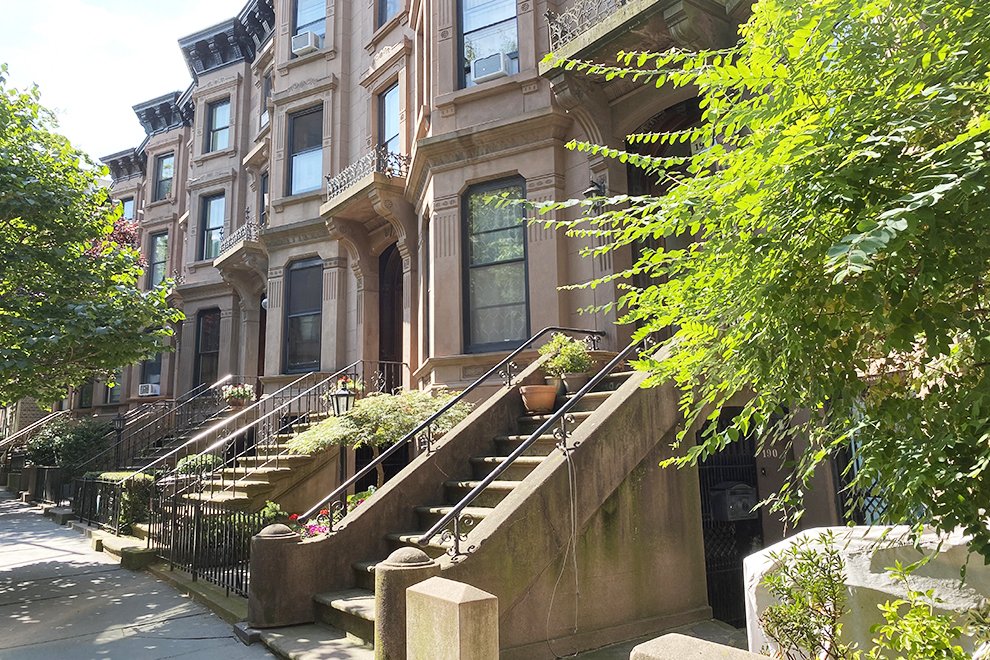
Brooklyn is too big for one answer to where you should buy. The right neighborhood depends on the kind of property you want, your commute, what draws you to a place, and what your budget covers. What I can tell you is where the housing stock tends to match what first-time buyers are looking for, and where it often does not.
Clinton Hill and Bed-Stuy
Clinton Hill and Bed-Stuy have some of the most intact brownstone blocks in the borough, and a good number of those buildings have been converted to condos over the years. Buyers here get the architecture and the floor-through layouts that draw people to Brownstone Brooklyn, with condo ownership, at prices that generally run below Park Slope or Cobble Hill. Greene Avenue in particular has some excellent conversions.
Crown Heights
Crown Heights works the same way. Park Place and Dean Street have some of the best condo inventory in the area, much of it in converted townhouses and small boutique buildings, and the price per square foot generally comes in below Prospect Heights.
Williamsburg and Bushwick
Williamsburg and Bushwick come up often with first-time buyers, and both present problems for a first purchase. Williamsburg is great, but it has become expensive enough that a first-time budget often does not buy much space. In Bushwick, the housing stock is all over the place, and I have seen plenty of new construction where the materials and workmanship raise real questions about how those buildings will age. A good building in Bushwick takes effort to find. An average one is easy to buy and hard to sell. There are good opportunities in both neighborhoods. They simply take more work.
When the Appraisal Comes In Low
Once you are in contract, the process is mostly routine, because I walk my clients through each step and know where the surprises come from. The appraisal is one of them.
I once represented a buyer purchasing a $2,500,000 condo in a converted Carroll Gardens brownstone. The four-story building had been divided into two triplexes. The lower unit had the garden and a finished basement. My client’s upper unit had the top floors, better light, a roof deck, and a rooftop extension. They were fundamentally different properties, and their values should have reflected that.
Lenders were still cautious after the 2008 financial crisis, and there were very few recent comparable sales to work from. The bank’s appraiser chose two nearby units, both of them lower units, and valued them without properly accounting for their below-grade square footage. The comparison undervalued my client’s apartment, and the appraisal came in below the contract price.
My client called me in a panic. When a home appraises low, the bank will only lend against the appraised value, and the buyer either makes up the difference in cash or risks losing the deal. An appraisal is a professional opinion, and it can be contested. We went back to the bank and laid out exactly what the appraiser had gotten wrong. After several conversations, the bank raised the appraisal to the purchase price, and the deal closed.
Where Deals Stall
The appraisal is not the only place a deal can slow down. From an accepted offer, a signed contract typically takes one to two weeks, and closing on a condo typically takes another 60 to 90 days. Most of what goes wrong happens in that window.
A co-op board can come back asking for more financial documents, or reject a buyer outright. Boards cannot reject anyone based on a protected characteristic, but they can and do turn down buyers over finances. A lender can drag out the mortgage commitment until the contingency deadline is days away. A condo board can take its time waiving its right of first refusal. None of these happens on every deal, but one of them happens on enough deals that it matters who is running the process. The process only feels routine when the person running it has already seen what can go wrong.
The Real Decisions
Buyers tend to think of buying a home as one big decision, made the moment they find the right place. In Brooklyn, it is a series of smaller decisions made earlier: your budget, your financing, the kind of ownership you want, the neighborhoods you will consider. The buyers who get the apartment made all of those decisions before it showed up.
For the full process, from the first conversation to the closing table, read my Brooklyn Buyer’s Guide.
Common Questions
How quickly do good properties sell in Brownstone Brooklyn?
A well-priced property draws a crowd at the first open house, and the listing agent often asks for best and final offers by the middle of the following week. Buyers who win typically know their number in advance and submit a strong offer within 24 hours. A lowball opening offer usually takes a buyer out of the running.
What is the difference between a mortgage pre-approval and a pre-qualification?
A pre-qualification is a lender’s estimate based on what the buyer has told them. A pre-approval means the lender has reviewed the buyer’s documents and is prepared to stand behind a number. In a competitive situation in Brooklyn, an offer without a pre-approval letter is unlikely to be taken seriously.
How much cash do I need beyond the down payment?
On a condo, buyer closing costs typically run 3% to 4% of the purchase price. A purchase at $1 million or more also carries the mansion tax, which starts at 1%. Attorney fees typically run $2,500 to $5,000.
Should a first-time buyer in Brooklyn buy a condo or a co-op?
Buy a condo if you can afford it. A condo is real property that you own outright, and you generally have more freedom to rent it out, sell it, and renovate it. A co-op means buying shares in a corporation, with a board that approves buyers, sublets, and renovations. A co-op can still be a sound way to own in Brooklyn for buyers who understand the board process and the building’s finances.
Do I need a real estate attorney before I start looking at properties in Brooklyn?
No. A buyer does not need an attorney until an offer has been accepted, and in New York, engaging one at that point takes a single phone call. What a buyer needs before looking seriously is a clear budget, a cash and financing plan, a monthly payment number, and a pre-approval letter.
What happens if a Brooklyn apartment appraises below the purchase price?
The bank will only lend against the appraised value, so the buyer either makes up the difference in cash or risks losing the deal. An appraisal is a professional opinion and can be contested with evidence. In one Carroll Gardens condo purchase at $2,500,000, the appraiser used lower-unit comparables without properly accounting for their below-grade square footage. After the appraisal was challenged, the bank raised it to the purchase price and the deal closed.
What can delay a Brooklyn home purchase after the contract is signed?
A low appraisal, a co-op board requesting more financial documents or rejecting a buyer, a lender delaying the mortgage commitment close to the contingency deadline, or a condo board taking its time waiving its right of first refusal. None of these happens on every deal, but they happen often enough that experience in managing the process matters.
Work With Craig
If you are buying your first place in Brooklyn, I will help you get ready before the right apartment shows up, so you can move when it does.