How Accurate Are Zillow Zestimates in Brooklyn
Less Reliable Than Zillow Wants to Admit
If you've ever looked up your Brooklyn home on Zillow and felt confused, or quietly offended, by the number you saw, you're not alone. Zestimates are one of the most talked-about tools in real estate and one of the most misunderstood. Here's what they actually are, why they're particularly unreliable in Brooklyn, and what a real valuation looks like.
What Is a Zestimate?
A Zestimate is Zillow's automated estimate of a property's market value. It pulls from public records, tax assessments, recent sales data, and user-submitted information, then runs it through a proprietary algorithm. Zillow updates these figures regularly and even publishes accuracy statistics by region.
On a national level, Zillow claims a median error rate of around 2 to 3% for on-market homes. That sounds reassuring until you realize that off-market homes, which make up a large portion of Brooklyn sales, carry a median error rate closer to 6 to 7%. And in practice, individual properties can be off by far more than that.
Why Zestimates Are Especially Unreliable in Brooklyn
Brooklyn presents a unique set of challenges that automated valuation models simply aren't built to handle well.
Co-ops are a black box. A significant portion of Brooklyn's housing stock is co-ops, and co-op sales don't always appear in public records the same way condo or townhouse sales do. Zillow often has incomplete or missing data for co-ops, and it has no way to account for monthly maintenance fees, which can vary dramatically between buildings and have a direct impact on what a buyer can afford and what a unit is actually worth.
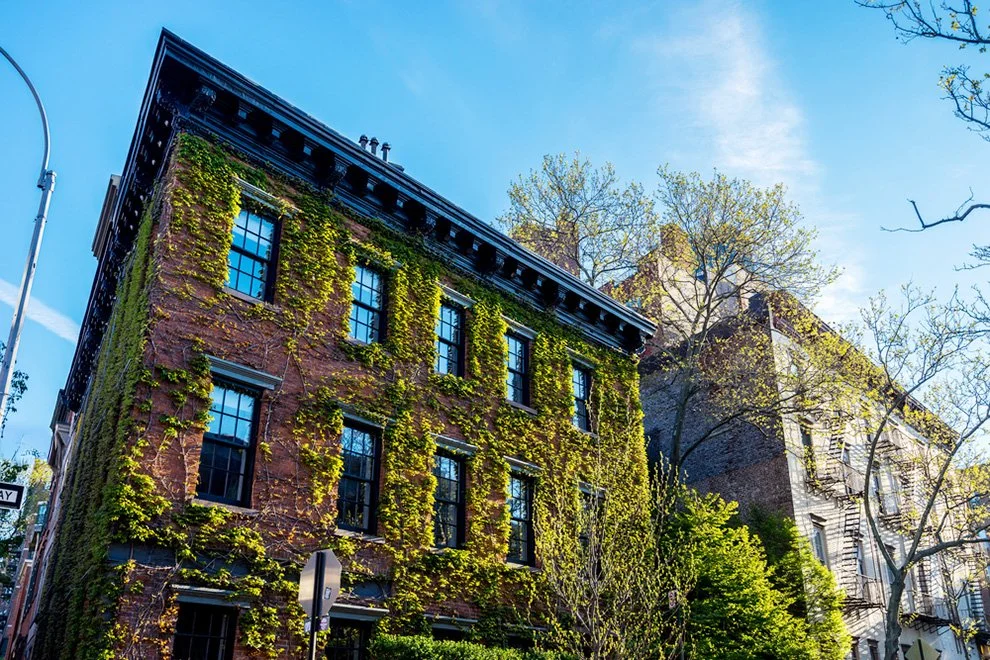
Brownstones are too individual. No two brownstones are alike. A gut-renovated parlor floor duplex on a tree-lined block in Park Slope is a fundamentally different asset from an unrenovated two-family three blocks away, even if they're the same square footage. Zillow compares properties based on size, beds, and baths. It can't see the exposed brick, the chef's kitchen, the original tin ceilings, or the condition of the roof.
Limited and irregular comps. In some Brooklyn blocks, there may only be two or three sales in a given year. Zillow's algorithm needs volume to be accurate. When it's working from a thin dataset, small anomalies like a distressed sale, an estate sale below market, or an off-market deal can skew its estimate significantly for every property nearby.
Off-market sales. A meaningful number of Brooklyn transactions happen quietly, through agents and word of mouth, without ever hitting the MLS. These sales often don't make it into Zillow's dataset at all, which means the algorithm is working from an incomplete picture of what the market is actually doing.
A Real Example of How Far Off Zestimates Can Be
I've seen Zestimates on Brooklyn properties that were off by $200,000 or more in either direction. A brownstone owner in Crown Heights once told me Zillow had their home at $1.75M. We listed it at $1.95M, received multiple offers, and closed at $2.2M. In the other direction, I've had buyers alarmed that a property was overpriced relative to its Zestimate, when in fact the Zestimate was simply missing recent renovation data and the asking price was completely justified.
These aren't edge cases. In a market as nuanced and inventory-constrained as Brooklyn, significant Zestimate variance is the norm, not the exception.
What a Real Comparative Market Analysis Actually Looks At
When I value a Brooklyn property, I look at things Zillow can't touch. Recent closed sales within the closest possible radius, weighted by how similar the properties actually are in terms of condition, floor, light, and layout. Active listings and what's sitting versus what's moving, which tells me where buyers are drawing the line right now. The specific block, not just the neighborhood, because one block in Park Slope or Prospect Heights can trade at a meaningful premium over the next. Building-specific factors for co-ops and condos, including financials, underlying mortgage, monthly fees, flip tax, and sublet policy. Days on market trends, price reduction history, and absorption rate for the property type. And the specific condition and updates in your unit, and how it will photograph and show.
None of that is in a Zestimate.
Should You Ignore Zestimates Entirely?
Not necessarily. They're fine for a rough orientation, a sanity check when you're casually browsing. If a Zestimate says $800K and you're pricing a property at $2M, that's worth a conversation. But for any real decision, whether you're listing your home, making an offer, or deciding whether to renovate before selling, a Zestimate is not a reliable foundation.
The Brooklyn market moves fast and trades on nuance. Getting the price right from day one matters enormously. Overprice and you sit, accumulate days on market, and eventually sell for less than you would have. Underprice and you leave money on the table. Neither outcome is acceptable when you're talking about the most significant asset most people own.
Get a Real Valuation for Your Brooklyn Home
If you are curious what your home would realistically sell for in today's market, I am happy to put together a full analysis specific to your property, your block, and current buyer demand. No algorithms, no automated estimates. Just an honest, data-driven conversation.