

A Practical Guide for Brooklyn Landlords
If you own rental property in Brooklyn, you're sitting on one of the most in-demand assets in the country. Rents across the borough increased roughly 8.7% year-over-year as of early 2026, vacancies in well-priced units are minimal, and tenant demand continues to outpace supply in most Brownstone Brooklyn neighborhoods. That's a favorable environment, but favorable doesn't mean automatic. The difference between a property that performs well and one that underperforms often comes down to how it's priced, presented, and managed.
I've been renting apartments and townhouses across Park Slope, Prospect Heights, Crown Heights, Cobble Hill, Windsor Terrace, and nearby neighborhoods for fifteen years. Here's what actually moves the needle.
Price It Correctly From Day One
Nothing costs a landlord more than an overpriced listing. A unit that sits vacant for four to six weeks at $400 above market loses more than it would ever recover from that premium, and it often ends up renting for less than the right price would have commanded on day one.
Brooklyn's rental market is hyper-local. Pricing varies not just by neighborhood but by block, building type, floor, and finishes. What a two-bedroom commands in a Park Slope brownstone conversion is different from what a two-bedroom commands in a newer Prospect Heights condo, even if they're four blocks apart. Generic online estimates, Zillow, StreetEasy's automated tools, frequently miss these nuances in either direction.
What proper pricing looks like:
Pulling recent comparable rentals in the same immediate area, not just the broader neighborhood
Accounting for unit-specific factors: floor, light, layout, laundry access, outdoor space
Timing the listing for peak demand windows (typically late spring and summer, though Brooklyn has demand year-round)
Adjusting within the first two weeks if qualified inquiries are unusually slow
The goal is to attract multiple serious applicants quickly. That gives you leverage in tenant selection, which leads directly to the next point.
Prioritize Tenant Quality Over Speed
The best landlord outcome isn't the fastest rental. It's the right tenant in place for a long time, paying on time, treating the apartment well. A vacancy costs money; a bad tenant costs significantly more.
A thorough screening process covers:
Credit check: look not just at the score but at the history: late payments, open collections, debt-to-income
Income verification: NYC standard is 40x the monthly rent in annual income; verify this with pay stubs, a letter from an employer, or tax returns for the self-employed
Rental history: speak directly to prior landlords, not just collect references
Background check: particularly relevant for long-term rentals
Screening is also where the FARE Act has changed the dynamic meaningfully. Because upfront move-in costs are lower for renters now that broker fees have shifted to landlords, the applicant pool has broadened. That's largely good news, as more qualified people can compete for your unit, but it also means screening discipline matters more, not less. More applicants doesn't mean all applicants are the right fit.
For a full breakdown of how the FARE Act changed the math for landlords, see my post on the FARE Act here.
Present the Property Like a Sales Listing
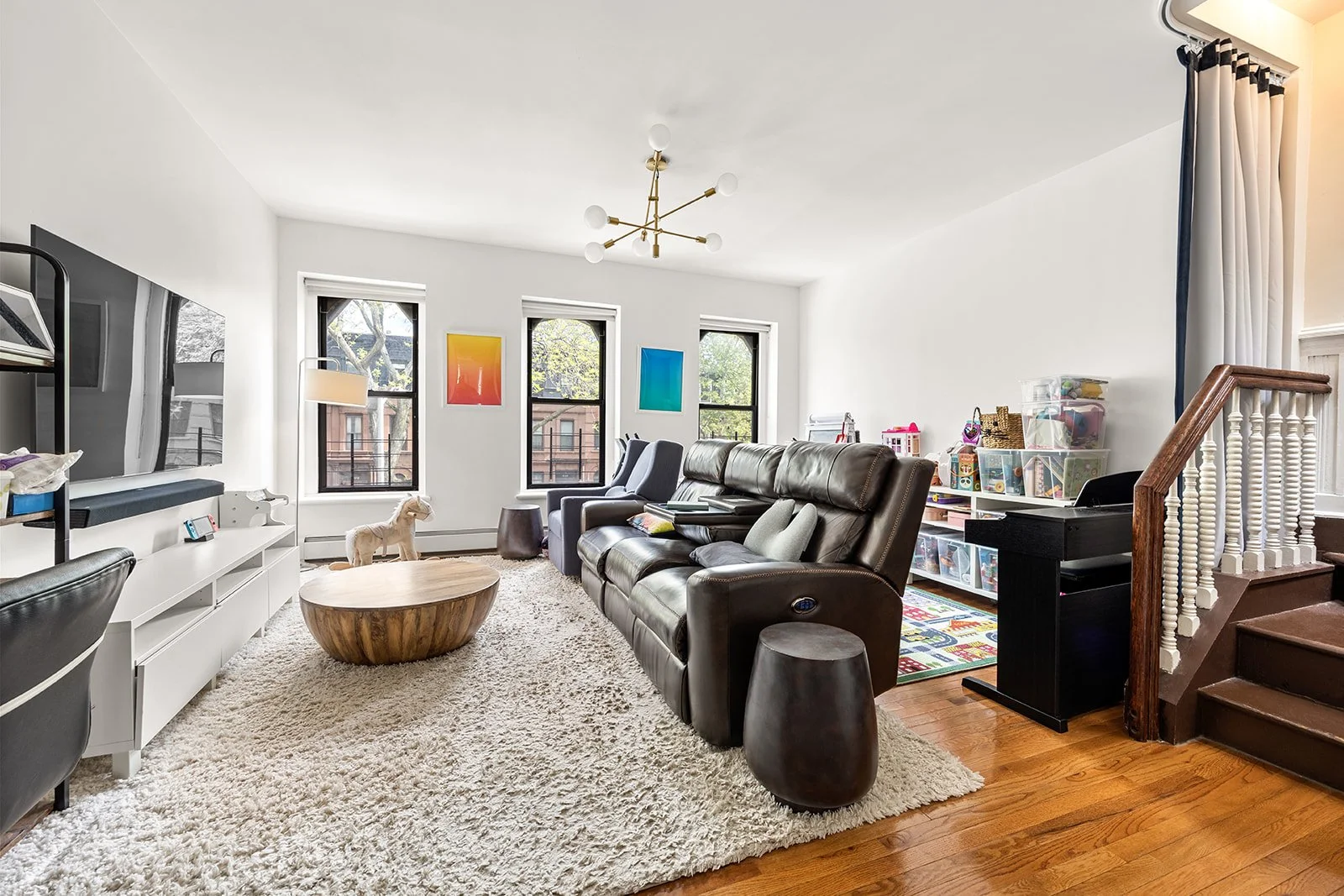
Most rental agents treat photography and marketing as an afterthought. Professional photos, a well-written description, and accurate floor plan information are standard practice for sales listings. There's no reason rentals should be treated differently.
Renters today do most of their searching online before they ever see a unit in person. The photos determine whether they request a showing. A dim, poorly framed photo of a beautiful Park Slope apartment will get fewer showings than a mediocre apartment with well-lit, professional images.
Practical steps that make a real difference:
Professional photography is not optional for any unit above entry-level pricing
An accurate, specific description that highlights genuine differentiators: quiet block, southern exposure, new kitchen, private outdoor space
Listing on StreetEasy and all relevant feeder platforms simultaneously
Prompt response to every inquiry; in a competitive market, an hour of delay can cost you a qualified applicant
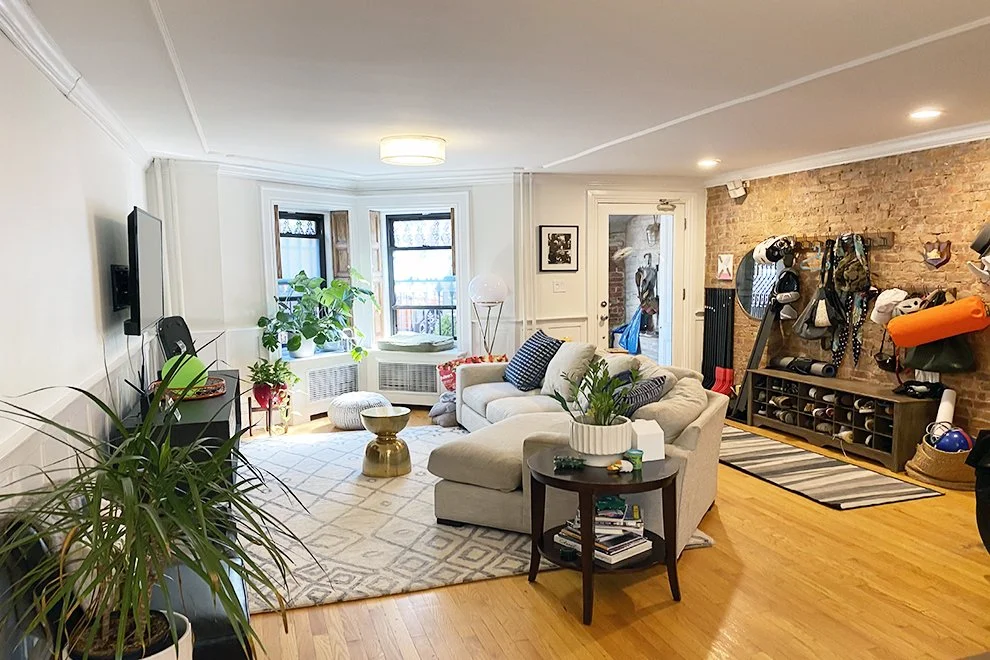
Staging matters too, even for rentals. Clean, decluttered, ideally unfurnished units photograph better and show better. If the unit is occupied, coordinate showings around the existing tenant with clear communication.
Know Which Improvements Actually Add Value
Not every upgrade pays off in rent. Understanding which improvements move the needle, and which don't, is something that comes from seeing a lot of apartments rent at a lot of different price points.
High-ROI improvements for Brooklyn rentals:
Refinished or replaced flooring (hardwood in particular signals quality)
Updated kitchen appliances; renters notice old, poorly functioning appliances immediately
In-unit laundry, if feasible; this is a meaningful premium driver across all Brooklyn neighborhoods
Fresh paint in neutral tones throughout
Updated bathroom fixtures: new faucet, toilet seat, lighting; cosmetic but impactful
Lower-ROI or situational improvements:
High-end finishes in a building or on a block that doesn't support premium pricing
Smart home technology where the tenant base isn't likely to value it
Major renovations that delay listing by weeks; the carrying cost often exceeds the rental bump
The question to ask before any improvement: will this actually change what a qualified tenant is willing to pay, or will it just make the apartment nicer without moving the needle on price?
Understand the Legal Landscape
Brooklyn landlords operate in one of the most regulated rental environments in the country. Staying on the right side of the law isn't just about compliance; it protects your income and your investment.
Market-rate vs. rent-stabilized: If your unit is market-rate, you have flexibility on pricing and lease terms. If it's in a rent-stabilized building, increases at renewal are capped by the NYC Rent Guidelines Board. Current guidelines (effective through September 2026) allow for increases of 2.75% on one-year leases and 5.25% on two-year leases for stabilized units. For market-rate apartments there's no cap on rent increases, but any increase above 5% requires additional advance notice to the tenant.
Good Cause Eviction: New York State's Good Cause Eviction law, which took effect in 2024, applies to some unregulated units and limits a landlord's ability to non-renew a lease without cause. It also treats rent increases above a certain threshold (currently 8.79% of the local rent standard) as potentially unreasonable. Understanding whether your unit falls under this law is important before you price a renewal.
The FARE Act: Since June 2025, broker fees are paid by the landlord when a broker is hired to market and lease the unit. This changes how upfront costs are structured and has reshaped how many landlords approach pricing and net year-one returns. In most cases, well-priced apartments have generated stronger annual income post-FARE than many owners initially expected.
Security deposits and lease terms: NYC has specific rules around security deposit handling, itemization of deductions, and return timelines. Non-compliance creates real liability.
If you're uncertain about your building's regulatory status, the NYC Department of Housing Preservation and Development and the state's DHCR are the authoritative sources. A good real estate attorney is worth the cost before you sign anything.
Time the Market When You Can
Brooklyn has demand throughout the year, but timing your listing strategically can affect both speed and price.
Peak rental season runs roughly April through August. Lease expirations cluster in the summer months, and most apartment hunters are actively searching during this window. Structuring renewals or re-listings to land in spring or early summer consistently generates stronger results.
Listing in October or November isn't a disaster; demand never fully disappears. But you may see fewer competing applicants and a slightly softer price ceiling.
If you have a tenant whose lease ends in January, it's worth discussing a short-term extension to push the re-listing into spring, assuming you have a good tenant worth retaining in the interim. The math often works out favorably.
Think About Vacancy as a Hard Dollar Cost
Landlords sometimes hesitate to cut price on a listing that's sitting because it feels like leaving money on the table. The calculation is worth doing explicitly.
If your unit is priced at $3,800 per month and hasn't rented after three weeks, every additional week of vacancy costs you $950. If a price of $3,600 would rent it immediately, you'd recover that discount in roughly two months and come out ahead for the remainder of the lease year, even if the tenant stays for only one year.
The right price is the one that rents to a qualified tenant quickly, not the highest number you can theoretically imagine. In practice these are usually close, but discipline in the first two to three weeks prevents a lot of unnecessary vacancy cost.
Out-of-Town Ownership Is Manageable, With the Right Setup
A number of my clients own Brooklyn rentals while living outside New York. Long-distance landlording is absolutely workable, but it requires a reliable presence on the ground: someone who can show the apartment, coordinate repairs, oversee move-ins and move-outs, and be reachable when something goes sideways.
For out-of-town owners, the real value of a trusted local broker goes well beyond finding a tenant. It's having someone who knows the property, knows the building, and will handle the ongoing landlord relationship with good judgment rather than just processing transactions.
Several of my longest client relationships fall into this category. The peace of mind that comes from knowing someone is genuinely looking out for your investment is difficult to put a number on.
The Bottom Line
Maximizing your Brooklyn rental income isn't complicated, but it requires doing several things consistently well: accurate pricing, disciplined tenant selection, professional presentation, and a clear understanding of the legal environment you're operating in.
None of this requires expensive management software or a property management company taking a percentage off the top every month. It requires local knowledge, attention to detail, and a broker who treats your rental with the same seriousness as a sales listing.
If you own property in Park Slope, Prospect Heights, Crown Heights, Cobble Hill, Windsor Terrace, or anywhere in Brownstone Brooklyn, I'm happy to talk through your specific situation. Reach out any time.
Work With Craig
Craig Yoskowitz is a Brooklyn real estate agent at Corcoran with 15 years focused on Brownstone Brooklyn. If you are a landlord thinking about renting your apartment and want a straightforward read on pricing, marketing, and how to navigate the current market, I would be glad to help.
