
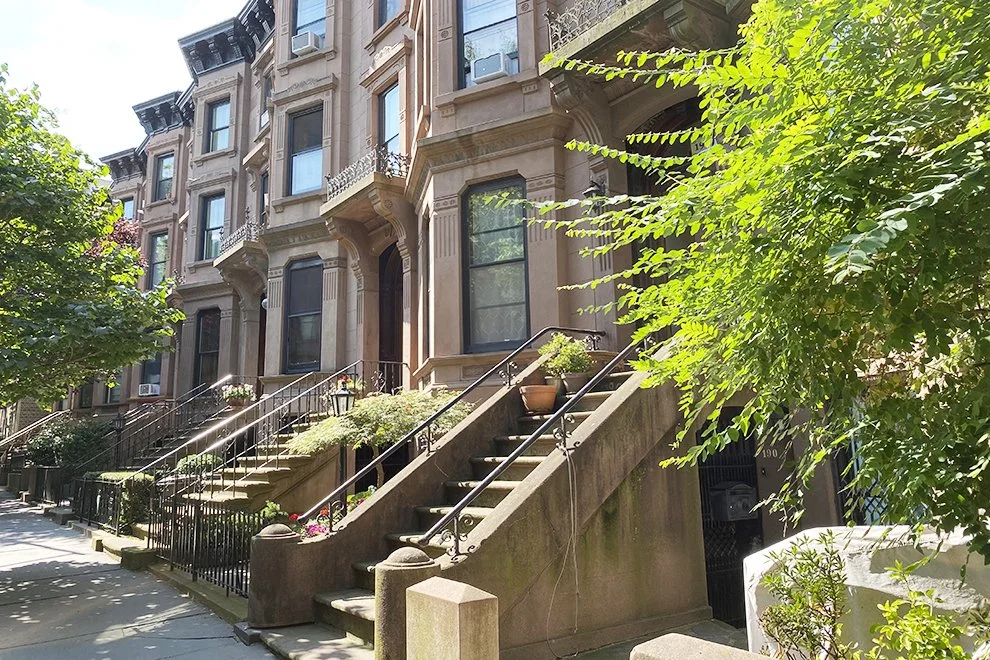
Three Strategies Worth Understanding Before You Start
Brooklyn real estate has long been one of the more reliable ways to build wealth in New York City. Values have appreciated steadily over decades, rental demand is deep and consistent, and the neighborhood diversity means there are genuine entry points at a range of price levels. But investing here is not simple, and the right approach depends heavily on your goals, your timeline, and your financial position.
Here is how I think about the three main strategies available to Brooklyn investors right now.
Buying a Home as Your Primary Investment
For most people, the most powerful real estate investment they will ever make is buying the home they live in. This is not a glamorous idea, but it is a sound one.
Owning in Brooklyn rather than renting means your monthly payment is building equity rather than disappearing. In neighborhoods like Park Slope, Prospect Heights, and Crown Heights, well-located properties have historically appreciated significantly over ten and twenty year periods. You also get the full utility of the asset while you hold it, which no other investment type offers.
The current environment is more forgiving for buyers than it was in 2022 and early 2023, when the rate spike froze much of the market. Inventory has improved in several neighborhoods, and sellers are more willing to negotiate than they were during the post-Covid frenzy. If you have been waiting for a better entry point, 2026 is a reasonable time to be looking seriously.
One thing I tell every buyer: stretch slightly for location if you can. A better block, a better school zone, proximity to the park or the train, these are the things that hold value in a downturn and outperform in a recovery.

Investing in a Multi-Family Property
A two, three, or four-family building in Brooklyn is one of the most practical investment structures available. You live in one unit, rent the others, and the rental income offsets your carrying costs. Done right, you are building equity in a strong market while other people help pay your mortgage.
Brooklyn has a chronic shortage of quality rental housing. Demand for well-maintained apartments in Brownstone Brooklyn is consistent regardless of broader market conditions because the neighborhood draws people who want to be here specifically. That stability is worth a lot.
Multi-family properties also give you inflation protection. Rents adjust annually. Your fixed-rate mortgage does not. Over time that spread tends to work significantly in your favor.
The main considerations: financing a multi-family is slightly more complex than a single-family purchase, board approval is not required the way it is with co-ops, but due diligence on building condition is critical, and being a landlord requires either hands-on involvement or a willingness to manage a property manager. Go in with clear eyes on all three.

Buying a Single Investment Unit
A one or two-bedroom condo in a Brooklyn neighborhood you know well is the lowest-complexity entry point for investors. You are not dealing with tenants in the same building, maintenance is handled through the building, and the asset is easy to understand and eventually sell.
The trade-off is that your returns are driven almost entirely by appreciation and rental income rather than by leverage and scale the way multi-family can be. That is not a bad thing if your goal is a straightforward, lower-maintenance investment.
I generally prefer new construction or recently renovated units for investors who are not local or do not want to deal with repair surprises in the first few years. For investors who are comfortable with a light renovation, an unrenovated unit in a good building and location can offer better value and the opportunity to manufacture some upside immediately.
One consistent piece of advice: invest in neighborhoods you understand. Brooklyn is not a monolith. Rental demand, appreciation trajectory, and tenant quality vary meaningfully from block to block and neighborhood to neighborhood. Work with someone who knows the specific market you are buying into.
What the Market Looks Like Now in 2026
Brooklyn real estate in 2026 is neither the frenzy of 2021 nor the freeze of late 2022. It is a functioning market with real opportunities for buyers and investors who are prepared and patient. Inventory has loosened in some segments while remaining tight in others, particularly for well-priced brownstones and multi-family properties in core neighborhoods. Interest rates remain elevated compared to the historic lows of the Covid era, but buyers have largely adjusted their expectations and financing strategies accordingly.
The investors I see succeeding right now are not trying to time the market perfectly. They are buying properties they understand, in neighborhoods with durable demand, at prices they can support through a range of scenarios. That approach has worked in Brooklyn through multiple cycles, and I expect it to continue working.
Thinking About Investing in Brooklyn?
If you are exploring your options, whether that is a first home, a multi-family, or an investment unit, I am happy to talk through what makes sense for your situation. I have spent 15 years in this market and can give you a straightforward read on where the opportunities are right now.
