
Two Similar Apartments, One Pricing Lesson
When Pricing Gets the Math Wrong, the Market Keeps Score
Sometimes the market makes a point so clearly that it would be a waste not to write it down. This is one of those times.
Two Brooklyn apartments came to market one day apart in the same Park Slope condo building: same finishes, same elevator, same gym, same parking garage downstairs, both two-bedrooms in excellent condition. The asking prices were $45,000 apart. One went into contract in 23 days. The other took 57. What happened in between is worth understanding, because it captures something about how this market works that broad data reports tend to miss entirely.
Same Building, Different Story
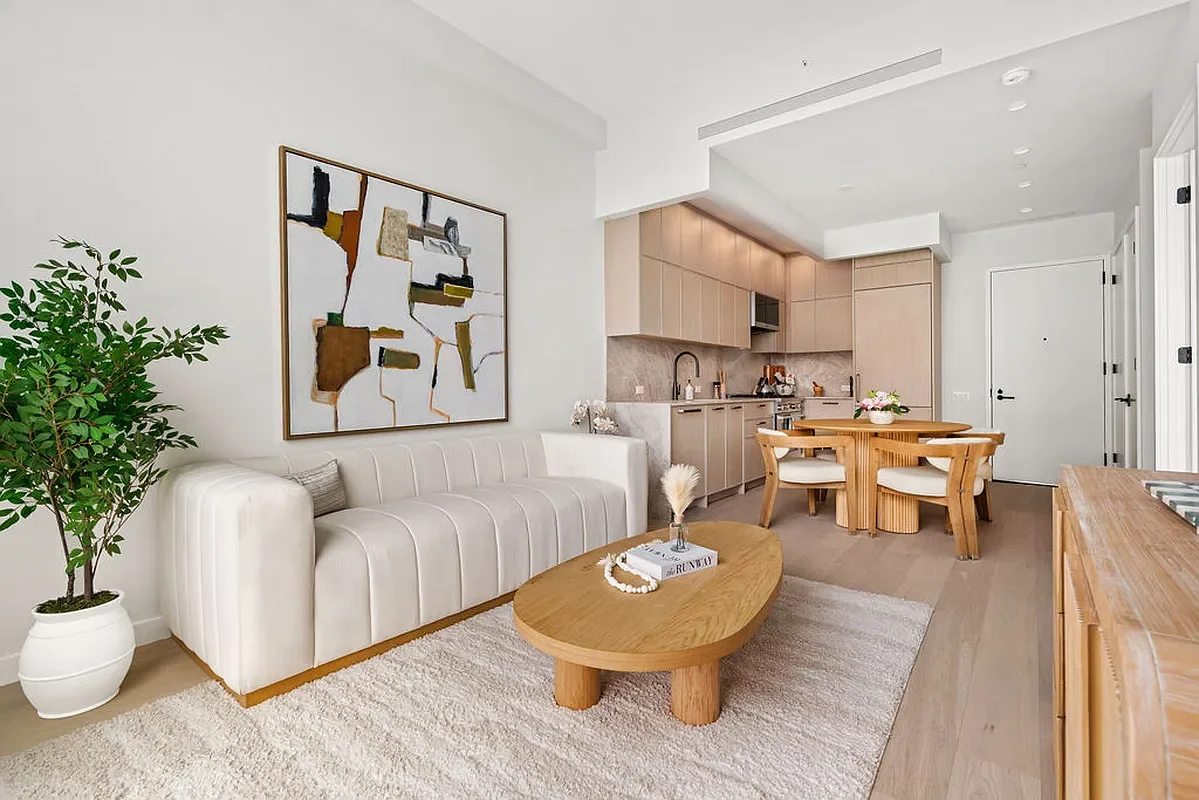
The apartment that moved quickly is on the second floor: two bedrooms, two and a half baths, 1,113 square feet, with a deeded parking spot included in the asking price of $1,295,000. It faces the rear of the building, looking out over the backyard rather than the street. It listed on April 14th and was in contract by May 7th.
The apartment that took longer sits two floors up, which in an elevator building is the more desirable position by any measure. It has two bedrooms and two baths across 1,036 square feet, a small south-facing balcony, and the kind of natural light that pours through southwest-facing windows for most of the afternoon. The asking price was $1,250,000, with a parking spot available for purchase at a separate price. It listed on April 15th and did not go into contract until June 11th, nearly two months later.
On paper, the fourth-floor apartment has the stronger lifestyle pitch: better light, outdoor space, a higher floor. And it was asking $45,000 less. So why did it take 34 extra days to find a buyer while the apartment below it was already in contract and moving toward a close?

Follow the Math
The answer starts before you even factor in parking. At $1,250,000 for 1,036 square feet, the fourth-floor apartment was asking $1,207 per square foot. The second-floor apartment, at $1,295,000 for 1,113 square feet, works out to $1,163 per square foot. So the apartment with the lower sticker price was actually more expensive per square foot, offered less total space, could not fit a dining table where the other apartment could, and had one fewer bathroom. Buyers who walk into both apartments are doing this arithmetic whether they say so or not, and the picture it paints is not the one the listing price suggests.
Then there is the parking. A deeded spot with an EV charger in Park Slope carries a floor value of around $150,000, conservative if anything, for a neighborhood where street parking is a nightly negotiation and a guaranteed space in a garage is one of those things you do not fully appreciate until you have lost one. Once you fold that into the fourth-floor apartment's effective asking price, you are looking at $1,400,000 for 1,036 square feet, or $1,351 per square foot. Against the second-floor apartment's $1,163, that is $188 more per square foot, or roughly 8% more expensive, for a smaller apartment where the parking was being priced and negotiated separately.
The fourth-floor apartment is genuinely good. The building is good. The light is better up there and the balcony is real. But the market looked at all of it and decided that those advantages were not worth an 8% premium, and it took 34 extra days to deliver that verdict.
What 34 Extra Days Tells You
The final sale prices on both of these apartments are not in yet, and that is where the real accounting will happen. But even before the closing numbers arrive, the timing gap is telling its own story about leverage and what happens to it when a listing sits.
A seller in contract 23 days after listing is negotiating from a position of strength. There were likely multiple buyers in the mix, the energy around the apartment was fresh, and the seller had every reason to hold firm. A seller still waiting after five or six weeks is operating in a different environment entirely, one where buyers arrive already wondering what the people before them noticed, where agents have started steering clients toward newer listings, and where the path to asking price has narrowed considerably. Getting the price right at the outset is not just about moving faster. It is about preserving the negotiating position that makes the final number possible.
When both of these deals close, I will write the follow-up. That is when we find out, in actual dollars, what this pricing decision cost.
Work With Craig
I have been selling condos, co-ops, and townhouses across Brownstone Brooklyn for fifteen years. If you are thinking about selling and want to understand what your apartment is actually worth right now, on your block, in your building, at your price point, call me.
