

Why the Number Is Harder to Pin Down Than You Think
If you own property in Brooklyn, the question of what it's worth probably crosses your mind more often than you'd admit. Maybe you've looked it up on Zillow and felt confused, or mildly insulted, by the result. Maybe you're starting to think about selling and want a real number before you make any decisions. Either way, getting an accurate answer in this market is more nuanced than most people expect.
Here is what actually determines the value of a Brooklyn home, and why the gap between an online estimate and a real valuation can be significant.
Online estimates are a starting point, not an answer
Zillow, StreetEasy's automated tools, and similar platforms use algorithms that pull from public records, tax assessments, and recent sales data. They're useful for a rough orientation, but they have real limitations in Brooklyn specifically.
Co-op sales don't always appear in public records the same way condo or townhouse sales do. Many transactions happen off-market or without the kind of detailed data these models need to work accurately. And the algorithm has no idea whether your apartment faces south with great light or north with none, whether the kitchen was renovated last year or in 1987, or whether your building has healthy financials or a looming assessment.
The Zestimate is a reasonable place to start a conversation. It's a poor place to end one.
What actually determines your home's value
The value of a Brooklyn property is shaped by factors that require real local knowledge to assess properly.
Recent comparable sales are the foundation. Not broad neighborhood medians, but actual closed sales of similar properties in the closest possible radius, weighted by how genuinely comparable they are. A one-bedroom co-op on the fourth floor of a prewar building on 8th Avenue in Park Slope tells you something about another one-bedroom co-op nearby, but the comparison requires judgment about condition, floor, light, layout, building financials, and maintenance levels. It's not a formula. It's pattern recognition built from doing this a lot.
The current pace of the market matters too. How many similar properties are active right now? How quickly are they moving? Are buyers offering above or below asking on properties like yours? These things shift month to month and require someone who is actively in the market to assess accurately.
Building-specific factors are significant for co-ops and condos. Monthly maintenance fees, the building's underlying mortgage, reserve fund levels, flip tax policies, and sublet rules all affect what a buyer can afford and what they're willing to pay. Two otherwise identical apartments in different buildings can trade at meaningfully different prices because of factors that never appear in a listing.
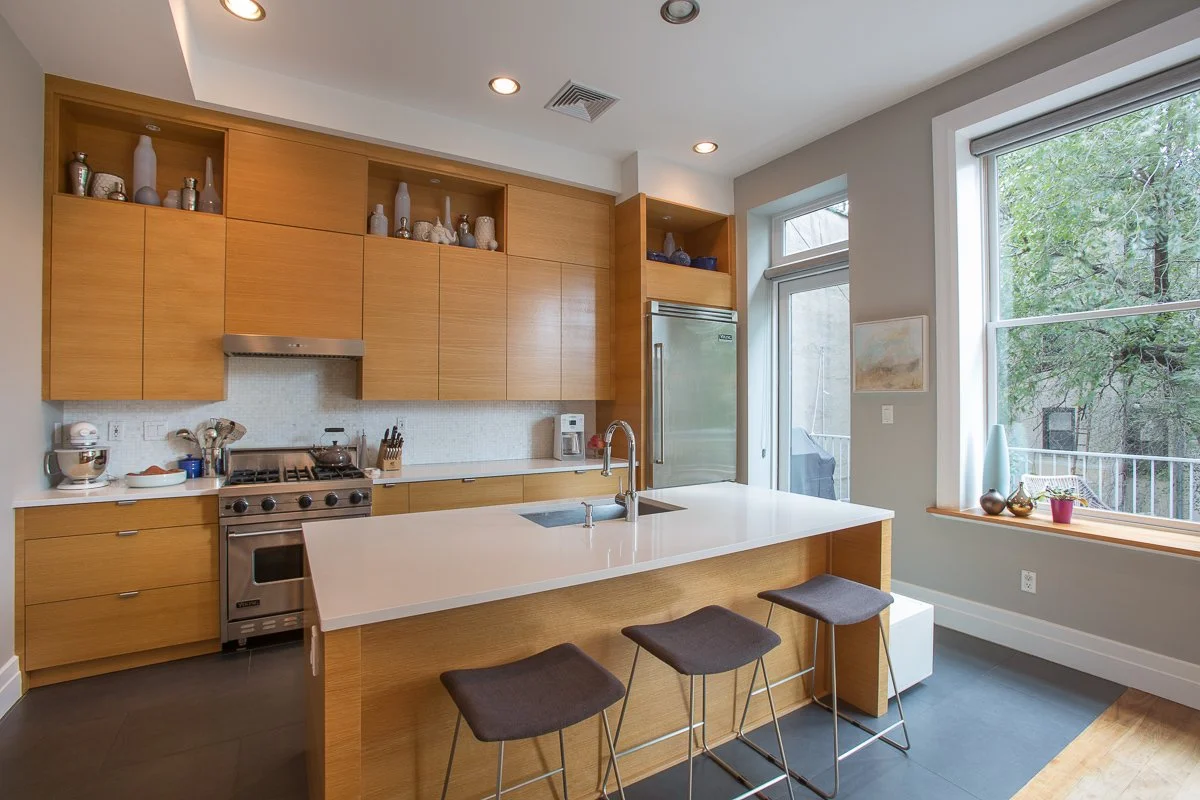
Your unit's specific condition and presentation matter more than most sellers expect. The difference between an apartment that was thoughtfully maintained and one that shows signs of deferred care is real and reflected in the price. The same is true for renovations, though not all renovations add equal value. A gut-renovated kitchen in a building where buyers expect it is worth more than the same kitchen in a building where most units are original and buyers are pricing in the work they'll want to do anyway.
Finally, the block matters in ways that are hard to overstate. Brooklyn pricing can shift meaningfully from one street to the next, based on character, proximity to the park or subway, school zones, and a dozen other variables that no algorithm weighs accurately, because most of them can't be reduced to data.
When it makes sense to get a real valuation
You don't need to be ready to sell to want a real number. A clear sense of your property's value is useful if you're considering a renovation and want to understand the likely return, if you're refinancing and want context before the appraisal, if you're thinking about buying a second property and need to understand your equity position, or if you're simply a homeowner who likes knowing what their most significant asset is actually worth.
None of these require you to list next month. A good valuation is just a useful piece of information.
What to expect from a real valuation
When I evaluate a Brooklyn property, I look at recent closed sales in the closest possible radius, current active listings and how they're performing, the specific attributes of the unit and building, and where the market is moving based on what I'm seeing day to day. What you get is a clear, honest number with the reasoning behind it, not a range so wide it's functionally useless.
If the number is lower than you hoped, I'll tell you why and what, if anything, might change it. If it's higher than you expected, I'll tell you that too. Either way, you'll leave the conversation with more information than you came in with.
What Your Brooklyn Home Is Worth
If you're curious what your property would realistically sell for in today's market, I'm happy to put together a full analysis specific to your home, your block, and current buyer demand.
